andrejsala.lv
Start
 
Development Opportunities Culture Living JAU
ConceptDetailed planningGlossaryExperienceResearchHistory
About Us  MapLV/EN/RU
Detailed planning
The Detailed Plan

The detailed plan enables the practical enactment of the Andrejsala development project which covers 36 hectares (~89 acres) of land with a projected total floor area of 700 square metres (~837 square yards). The detailed plan covers a total area of 48.5 ha (~120 acres) comprising land, a band of Rīga freeport’s aquatorium and a section of Eksporta Street.


The detailed plan defines the rules and principles for construction in Andrejsala. It was commissioned by SIA Jaunrīgas attīstības uzņēmums and developed by SIA Grupa 93, a project management and planning consultation company, in cooperation with the SIA Forma architecture firm.


The solutions in the detailed plan are based on development visions elaborated by expert workgroups, a report following in-depth research and the Andrejsala development concept that was commissioned by SIA Jaunrīgas attīstības uzņēmums and worked out by Rotterdam’s Office for Metropolitan Architecture led by Rem Koolhaas in co-operation with London’s engineering company Ove Arup & Partners Ltd and the Amsterdam-based Inside Outside landscape architects. To reach a final version of the detailed plan, certain corrections were made to the initial project as opinions and statements of competent authorities and inhabitants’ proposals had to be taken into account.


Significance for Rīga's development


Andrejsala's development is based on the principle of sustainability, which is more than just a concept and an approach in the construction and maintenance of buildings, because it particularly emphasises the need for high-quality public space and extension of the public transport grid, a priority for serving Andrejsala. The intended interspersing of functions would enable the local people to live and work within easy reach, eliminating the need for cars and avoiding further complicating the Latvian capital's central areas' congestion issues.


The functional composition of the new Andrejsala development is varied enough to create the necessary prerequisites for an attractive, dynamic and progressive environment. 66.7% of the total build area will be taken up by apartments while other functions are divided as follows: 11.9% will go to offices, 8.8% – culture, education and entertainment, 5.5% – hotels, and 7.1% – retail. By enacting the maximum construction programme, Andrejsala would be a home for 9,000–14,000 inhabitants and a workplace for 6,000–9,000 people.

One of the most challenging tasks was the blueprinting of Andrejsala's integration with the architectural lines and transport structures of the rest of Rīga, however the plan has successfully resolved it. Andrejsala, a former port area, lies within the protective zone of the historic centre of Rīga (HCR), but with the envisioned new development the architectural pattern of the territory will be created completely anew, which is going to have an obvious influence on the cityscape.   


The Andrejsala detailed plan is unprecedented in terms of mutual impact with the HCR's environs. This shows in the interrelations of the existing and future characteristics of the urban environment – more specifically, the juxtapositions of old and new buildings in both qualitative and quantitative terms – as well as in the realisation of the key impact of the unbuildable open space, the river Daugava, on the manner that the skyline of Vecrīga is perceived.


The construction works in Andrejsala are to take place in several directions and phases: modern structures will be built simultaneously with the renovation of Andrejsala’s historical buildings (marked in red in the picture on the right) and the planning of new public outdoor spaces to create fully accomplished, integrally developed areas capable of functioning independtly. The detailed plan defines complex development areas, i.e., blocks or groups of blocks to be developed following a uniform pattern. Until the start of each subsequent construction stage, the parts of the territory other than building sites will be adjusted to temporary functions such as parking lots, seed-plots, lawns, sports and recreation areas.         

Shortly before the confirmation of the Andrejsala detailed plan, the Rīga City Council decided to conduct the economic assessment of the Hanza crossing across the river Daugava to estimate the more optimal solution between a tunnel and a bridge. Thus, when confirming the Andrejsala detailed plan, a moratorium on construction for zones C5, C6, C10 and C11 was defined until April 16, 2011, when the said assessments have to be completed.


Public outdoor space in Andrejsala


When organising a new and modern urban district, it is natural and even obligatory to think about the quality, function and aesthetics of its public outdoors. In Andrejsala, the public outdoor space* will take more than 37 per cent of the land area. Its future setting is going to consist of the Daugava waterfront/coastal promenade, a linear park in the tunnel’s protective zone, several strips of public outdoors crossing the territory (east to west, south to north), Andrejostas Street (subject to reconstruction), and other public roads with street greenery. The public outdoors are supplemented with gardens in privately owned plots of land and courtyard commodities with more greenery.


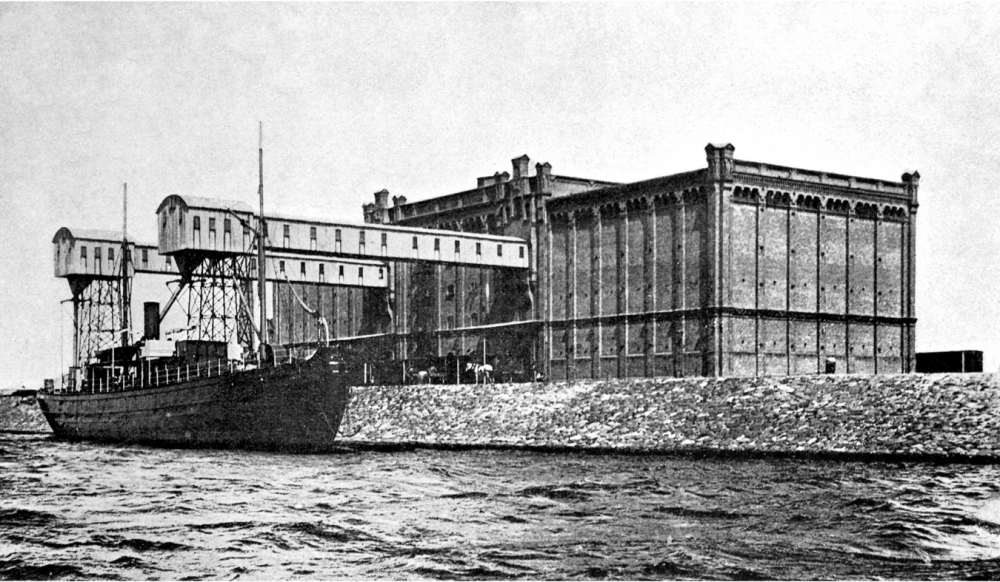
Along the river, a two-kilometre (1.24-mile) green promenade of varying commodity and use would take about 3.3 hectares (8.15 acres). Andrejsala will also be encircled by a permanent pedestrian-and-bicycle artery of no less than 6 metres (19.7 ft) in width. The detailed plan provides that greenery takes up one third of the promenade’s total area. At every 50 to 70 metres the promenade belt will be connecting to more sizeable outdoor units: a 1.5-hectare (3.7-acre) park, an 0.6-hectare (1.5-acre) square beside the Museum of Contemporary Art, a small park near the old grain silo, and regularly interspaced strips of public outdoors with greenery.


The aforementioned strips of public outdoors define the composition of blocks in the new development and provide for restricted driving access and free movement of pedestrians throughout the whole territory as the embankment will be connected with the main pedestrian street, Andrejostas Street and Eksporta Street. A linear park to be created through a clever realisation of the tunnel's protective zone will link the Viesturdārzs Park and the waterfront. The creation of high-quality environment and urban landscape in Andrejsala is authoritatively provided within the binding regulations.


___


* 'Public outdoor space' denotes streets, boulevards, squares, parks, gardens, embankment areas and inner areas of housing districts, regardless of the type of ownership, that can be freely accessed by members of public. (Source: HCR Preservation and Protection Law)


Transport solutions


The realisation of transport in Andrejsala also will conform to the principles of sustainable development and aim for the maximum satisfaction of the needs of central Rīga, while also contributing to the resolution of some of the long-range problems of the entire city due to increased traffic and resulting pollution. For this, a particular set of policies regarding car parks and public transport will be in place, envisioning also alternative means of transport.

The transport needs of Andrejsala's locals, businesses and visitors will be provided for by a proportionally distributed private and public transport service, such as trams and buses. There will be a gradual conversion towards a balanced system as the construction volume increases and the tramway system develops in the entire city. The multifunctional character of the future Andrejsala is a way of ensuring a reduction of transport needs and distances between one's workplace, home and central areas. This idea is in line with the entire city's perspective on sustainable development.

A priority will be given to public transport (Stage 1, Stage 2), pedestrian and bicycle routes, which may be the preferred manner of conveyance in most of Andrejsala. The plan also foresees moorage for riverboats and river taxis as well as landing space for helicopters used as air taxis.


Andrejsala makes convincing strides towards integration with central Rīga's and its peripheral areas' transport system. For example, there's its main street with four new connections to Eksporta Street as well as gateways to Hanzas Street, Pētersalas Street and Katrīnas dambis. Eksporta Street is going to connect Andrejsala with planned Rīga Northern Transport Corridor with new crossing of the Daugava River.


Fifteen percent of Andrejsala's territory would be used for streets and public roads while access roads to specific buildings and facilities will be organised by means of particular entry areas with restricted driving, thus keeping the outdoors pedestrian-friendly and pedestrian-centred.


The principles regulating the car park creation foresee a limited number of facilities and intend to reduce their effect on the public space: not more than 50 per cent of the calculated parking space may be built, and only up to 10 per cent of them may be located at grade near the territory's buildings.


The development of transport system will be carried out in several stages. The second stage will see a new tramline along Andrejostas Street, thus servicing both the new district and the existing Eksporta Street district. The initial number of car parks will gradually decrease and the temporary parking lots set up during the first stage of the development will cease to exist because of the land's new use for construction in a subsequent stage of the development.


The detailed plan refers to a Hanza crossing of the Daugava River, which according to Rīga's master plan is going to take the shape of a tunnel. For this, a protective zone has been earmarked.


The detailed plan has made considerations of some potential variations in the development scenario; the plan's research section (Appendix 12) argues that a low-rise bridge with a connection to Eksporta Street is possible to construct by using the same area as envisioned for the tunnel plus the area within Andrejostas Street’s red lines. The Rīga City Council has begun to work on the economic assessment of the Hanza crossing to estimate the more optimal solution between a tunnel or a bridge.


Building heights


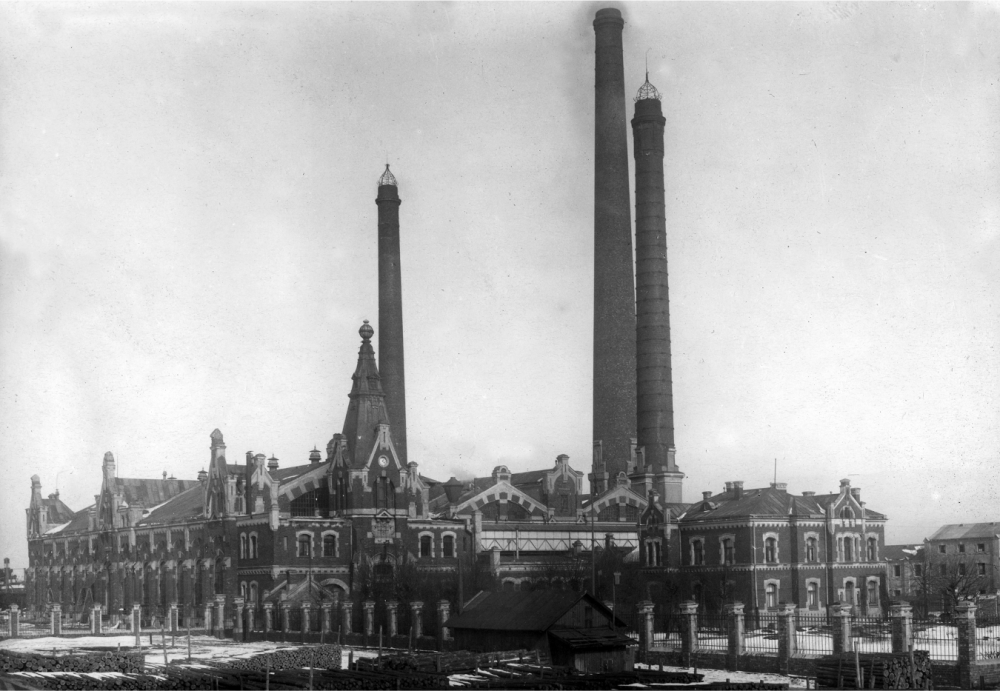
According to the authorities and in line with the HCR's historically determined traditions of construction, the maximum height of new structures in Andrejsala in most cases is 21 metres (68.9 ft). The territory would be spatially dominated by the vertical accents of the former power station's funnels (72 and 85 metres / 236 and 279 ft) and the turret on top of its office building (32.5 m / 107 ft). Considering that and in order to add a particular architectural richness and urban quality to the district, the detailed plan will, in some cases, accept accent buildings that exceed 21 metres in height in composition with the historic power station's building.


Because of the expected impact that the planned construction in Andrejsala would have on the environs of the HCR and the national heritage including the skyline of Vecrīga, the ensemble of the spires and the cityscape along the Daugava's riverbanks, the process of developing of the detailed plan included a stage for analysing its visual impact, deemed a success by the HCR's Preservation and Development Council. The study results are summed up in Appendix 8 of the detailed plan and in a special brochure (cover image on the right).


After the visual impact analysis, improvements were made to the lines of sight from the Daugava waterway, by significantly reducing the height of the buildings in comparison with the way it was laid out in the initial concept and the first draft of the detailed plan. It now permits the construction of accent buildings in those locations where the view to Vecrīga is already hindered by structures and where it would not create new obstructions to long-range views along the HCR's streets.


The new and vivid architectural composition to be implemented in Andrejsala is going to both respect the dynamics of the historic port structures near the Daugava and create a harmony with the existing highlights such as Vecrīga, the Vanšu Bridge and Ķīpsala. The provisions of the detailed plan are explicit about the creating of new landmarks: the local accentuated structures are limited in location and height (32 metres / 105 ft maximum); some new accents are allowed at 42 metres (137.8 ft); in the north part of Andrejsala the more prominent structures may reach 56 metres (183.7 ft). All of the major edifices would be the result of architectural contests.


Further actions


The developer of the real estate in Andrejsala continues to plan and work on integral architectural models for specific building blocks and complex development areas in Andrejsala, as well as blueprints of roads, other infrastructure, buildings and structures pertaining to the public outdoors. The company also plans to organise national and international architectural contests and to make calls for public discussions of construction intents. For more information on the general development visions of Andrejsala, please visit the Development section of our website.


« Return   |   Top   |   Print